Technology is becoming one of the world’s most important sources of economic strength. Yet technological progress should not be measured simply by the facilities a country builds or the innovations it announces. What matters is how technology improves productivity, creates opportunities for businesses and benefits people’s lives. For Kazakhstan, the priority is to turn digital innovation into practical economic progress.
This approach is central to Alatau City, a major urban and economic development project in southeastern Kazakhstan. As President Kassym-Jomart Tokayev emphasised, the project is of strategic importance to the entire country. Our aim is to bring together modern infrastructure, investment and digital technologies to support new businesses, skilled jobs and better public services.
Kazakhstan has built much of its prosperity on natural resources and its position at the crossroads of Europe and Asia. Energy, mining, agriculture and transport will remain central to our development. We do not see a choice between these established strengths and the digital economy. Technology can make our traditional industries more competitive while creating new sources of growth.
That transformation is already producing results. Around 90% of Kazakhstan’s public services are available online, while IT services exports exceeded $1.14 billion in 2025. We are also expanding our AI capabilities through Alem.Cloud, a national supercomputer in Astana, and the alem.ai centre, which brings researchers and start-ups together to develop practical applications.
NVIDIA chief executive Jensen Huang’s visit to Astana in October underlined the growing international interest in Kazakhstan’s potential. Our discussions with technology partners are concerned with applying artificial intelligence to the physical economy: mining, manufacturing, energy and transport. We are beginning to see what this can mean in practice. For instance, the use of digital technologies at KAZ Minerals has helped increase copper recovery by 2% and plant productivity by 7%. Those are tangible gains in a longstanding Kazakh industry.
The aim is not to create a technology sector isolated from the rest of the economy. It is to help existing enterprises modernise, give entrepreneurs new markets to serve and equip young people with the skills to build successful companies. For international investors, opportunities extend beyond data centres and software to working with established industries to improve productivity, energy efficiency and logistics. A stronger digital economy should be reflected in the productivity of our factories, the reliability of our transport networks and the opportunities available to our citizens.
International cooperation is an important part of this approach. As part of my visit to London this week, I discussed opportunities for British businesses, financial institutions and educational partners to contribute to Kazakhstan’s next phase of economic and technological development. The United Kingdom brings considerable strengths in research, finance, engineering and professional services. Our Strategic Partnership and Cooperation Agreement provides a foundation for collaboration in financial services, digital technologies, science and innovation. British and London-based institutions could help mobilise long-term investment for Alatau’s infrastructure, while educational partners could contribute to research and skills development. Satellite connectivity provided through OneWeb has already helped connect 328 remote Kazakh villages, demonstrating how international technology partnerships can address practical needs across a country as geographically extensive as ours. We also see opportunities to develop partnerships with leading British educational institutions, helping Alatau become a centre for education, research and skills development.
These international partnerships have a practical application in Alatau. Located between Almaty and Konayev, near trade routes linking Europe and Asia, the city is intended to bring together manufacturing, logistics, finance, education and technology businesses. The aim is to combine reliable infrastructure and a dedicated legal framework with international expertise, enabling companies to attract investment, develop new services and reach markets across the region.
Our first priority in developing Alatau is to get the fundamentals right, for existing residents as well as future investors. Work is underway on 28 infrastructure projects, including electricity networks, water supply facilities and roads. These improvements are not separate from our ambition to create a modern city; they are its foundation. Housing, transport and public services will matter just as much as the technologies we introduce.
The scale of the opportunity is considerable. Alatau’s investment pipeline includes 67 projects valued at approximately $6.9 billion, with the potential to create around 55,000 jobs if implemented. These are prospective projects, not investments already completed. Our responsibility is to turn them into operating businesses and lasting employment. The October launch of the Iconic Complex, a major mixed-use development, is one sign of progress, alongside work on manufacturing and logistics facilities.
We also intend to use technology where it can improve the day-to-day operation of the city. Alatau’s authorities have agreed with South Korean companies to pilot a digital model of urban infrastructure. If successful, it could help monitor utility networks, identify maintenance needs and manage resources more efficiently. For residents and businesses, the value of such an approach is straightforward: fewer disruptions, better services and a city that is easier to live and work in.
Equally important is investor confidence. Alatau has a special legal regime intended to provide predictable conditions for business. In his State of the Nation Address on October 28, President Tokayev called for a dedicated Investment Court based on the English common law model to hear commercial disputes in Alatau. British companies, including Arup and Norton Rose Fulbright, have contributed expertise to the city’s planning and legal development. This combination of international experience and Kazakhstan’s long-term commitment is central to the project.
The city should open new opportunities for Kazakh manufacturers, technology firms and universities, connecting them with investors and customers across the region. We are beginning work to strengthen cooperation among Alatau, the Astana International Financial Centre and the Kazakhstan Stock Exchange, with the aim of improving access to project finance and capital markets. Reliable long-term financing will be essential to turning the city's plans into operating businesses. Government can provide the framework, but businesses and international partnerships must create lasting economic value.
Supercomputing, artificial intelligence and projects such as Alatau matter because of what they can make possible beyond the technology sector: stronger businesses, skilled jobs and public services that improve daily life. By putting innovation to work in the industries and communities that sustain our country, we intend to make digital transformation a lasting source of prosperity. That is a goal Kazakhstan is pursuing with its international partners and, above all, for its citizens.
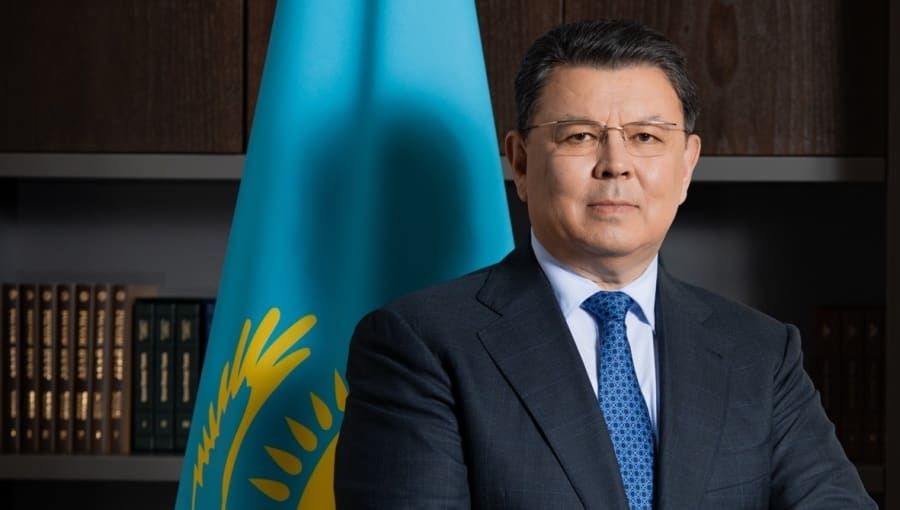
Kanat Bozumbayev is the Deputy Prime Minister of Kazakhstan.